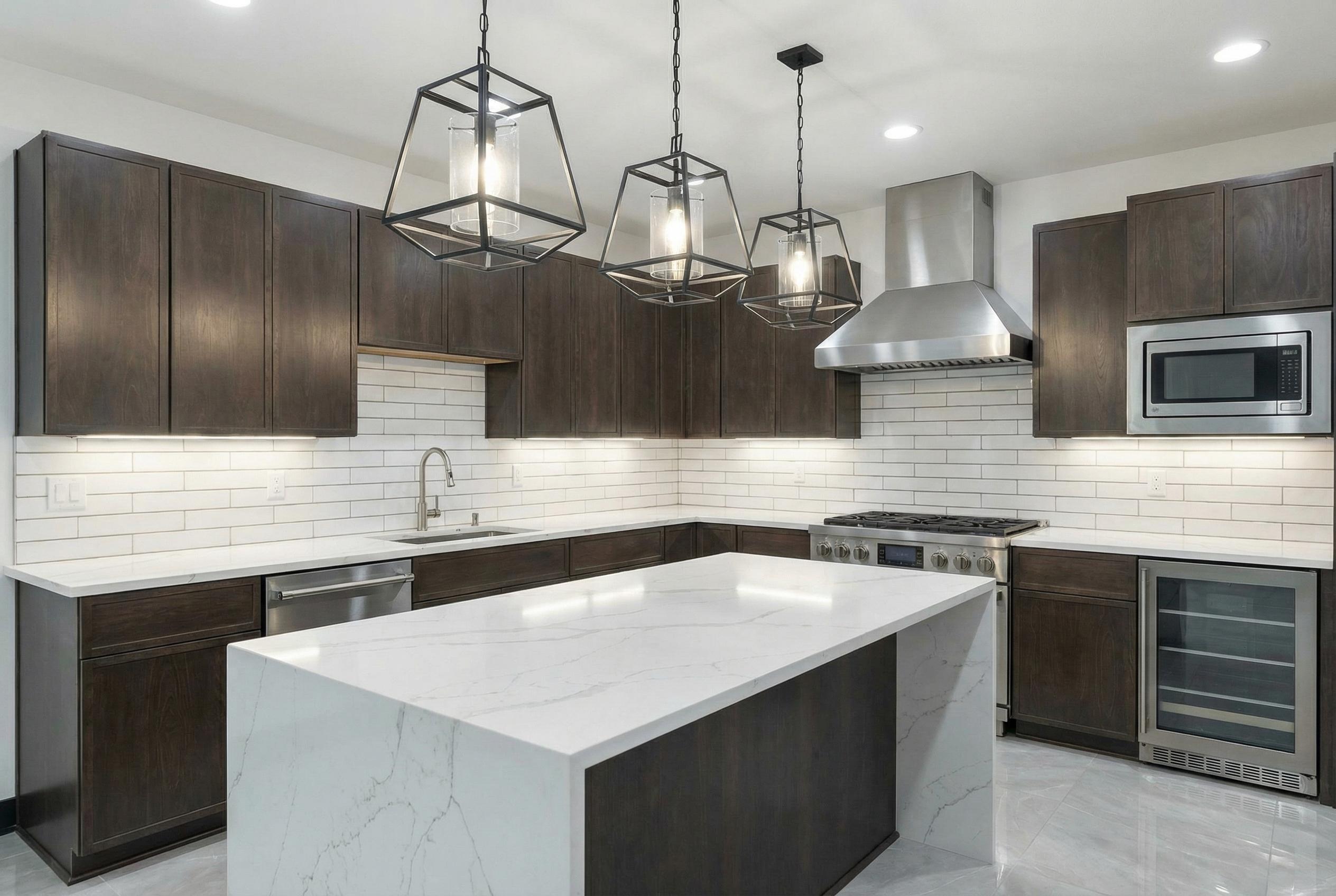
Shaker Cabinets Guide
If there's one cabinet door style that dominates American kitchens, it's the shaker. Industry estimates suggest shaker-style cabinets account for over 70% of all kitchen cabinet sales in the United States — and that number has been growing, not shrinking.
That's a remarkable statistic for a design that originated with a small religious community in the 1770s. So what makes shaker cabinets so enduringly popular? And are all shaker cabinets the same? Let's break it down.
What Makes a Cabinet "Shaker Style"?
A shaker cabinet door has a simple, five-piece construction: four frame pieces (called rails and stiles) surrounding a flat center panel. No ornate carvings, no raised panels, no curves — just clean lines and functional simplicity.
The original Shakers (a Christian sect that settled in the northeastern United States) believed that beauty should come from utility. Their furniture was designed to be functional, well-built, and free of unnecessary ornamentation. That philosophy produced a cabinet door design that — 250 years later — still feels relevant.
Why Shaker Cabinets Have Stayed on Top
They Work with Every Design Style
This is the real superpower of shaker cabinets. The clean, simple lines act as a blank canvas that adapts to whatever style you pair them with:
- Modern/Contemporary: Pair with minimalist hardware (or no hardware), flat-panel countertops, and a monochromatic color scheme.
- Traditional: Add crown molding, decorative hardware, and classic stone countertops.
- Farmhouse: Combine with open shelving, apron-front sinks, and warm wood accents.
- Transitional: Mix contemporary and traditional elements — shaker cabinets bridge the gap naturally.
- Coastal/Cottage: Use lighter colors (white, soft blue, or green) with simple knobs and natural materials.
No other door style offers this level of versatility. Raised panel doors read as strictly traditional. Flat slab doors read as strictly modern. Shaker sits comfortably in the middle and works with everything.
They Have Timeless Resale Appeal
If you're thinking about home value, shaker cabinets are the safest choice you can make. Real estate agents consistently recommend them because they appeal to the widest range of buyers. A shaker kitchen photographed by a professional will look current in listing photos today, and it'll look equally current in 10 years.
They're Easy to Maintain
The flat center panel and simple frame design means shaker doors are easy to clean — there are no intricate grooves or crevices where grease and dust accumulate (a common complaint with raised panel or cathedral-style doors). A damp cloth is all you need for routine maintenance.
They Showcase Finish Quality
Without decorative details to distract the eye, a shaker door puts the quality of its finish front and center. This is why high-quality shaker cabinets look noticeably better than cheap ones — the simplicity of the design reveals everything about the wood grain, stain depth, and surface smoothness.
3 Types of Shaker: Which One Is Right for You?
Not all shaker doors are identical. The basic five-piece-with-flat-panel concept has several variations, and the differences are more significant than they might seem at first glance.
Traditional Shaker (Our Ardelle Series)
The classic shaker profile with a clean 90-degree inside edge where the frame meets the center panel. This is the most popular and widely recognized shaker design — the one most people picture when they hear "shaker cabinets."
The Ardelle series is our most versatile, available in 6 finishes: White, Ash, Blue, Charcoal, Ebony, and Timber. If you want the broadest design flexibility and the most color options, this is the one to choose.
Best for: Any kitchen style. This is the universal choice.
Beveled Shaker (Our Tallis Series)
A refined variation that adds a subtle bevel (angled cut) to the inside edge of the frame. This small detail adds visual depth and a slightly more polished, upscale feel compared to the flat-edge traditional shaker.
The Tallis series is available in 2 finishes: Fairy Green and Swan White. These are distinctive colors that pair beautifully with the beveled profile's extra sophistication.
Best for: Transitional, cottage, and farmhouse kitchens where you want a touch more character than a standard shaker.
Slim Shaker (Our Slim Series)
A more contemporary take with a narrower frame profile, giving the center panel more visual prominence. The slimmer frame creates a sleeker, more modern appearance while still maintaining the fundamental shaker structure.
The Slim series is available in 2 finishes: Frost and Mocha. Both are sophisticated neutral tones that emphasize the modern, clean-lined character of the slim profile.
Best for: Modern, contemporary, and minimalist kitchens where you want shaker's versatility with a more streamlined look.
How to Choose Between the Three
The honest answer? All three are excellent choices and you genuinely can't go wrong. But here's a framework if you're stuck:
- If you want maximum color choices or are unsure about style direction: go with Ardelle (Traditional Shaker, 6 colors).
- If you love green or want a soft white with extra character: go with Tallis (Beveled Shaker).
- If your style leans modern or contemporary: go with Slim Shaker (Frost or Mocha).
- If you want a two-tone kitchen: you can absolutely mix series — for example, Slim Mocha lowers with Ardelle White uppers.
What to Look for in Quality Shaker Cabinets
Since shaker is the most popular style, it's also the most widely produced — which means quality varies enormously. Here's what separates a premium shaker cabinet from a cheap one:
- Solid wood door frames: The rails and stiles should be solid hardwood with mortise-and-tenon joints (not MDF or stapled together).
- Multi-step finish: A quality finish involves sanding, staining, sealing, and topcoating — multiple steps that create depth and durability. Cheap cabinets use a single-pass spray that chips and fades quickly.
- Plywood center panel: The flat panel in the center should be plywood, not cardboard or thin MDF.
- Consistent finish across doors and boxes: The cabinet box should match the door finish, not look like an afterthought.
- Mitered door construction: Premium shaker doors use mitered (45-degree) joints at the corners for a refined look. Standard construction uses butt joints.
Every Quik Cabinets shaker door is built with solid wood frames, mortise-and-tenon joints, and a 10-step hand-finishing process. It's the kind of quality you typically only find in custom cabinetry — at a fraction of the cost.