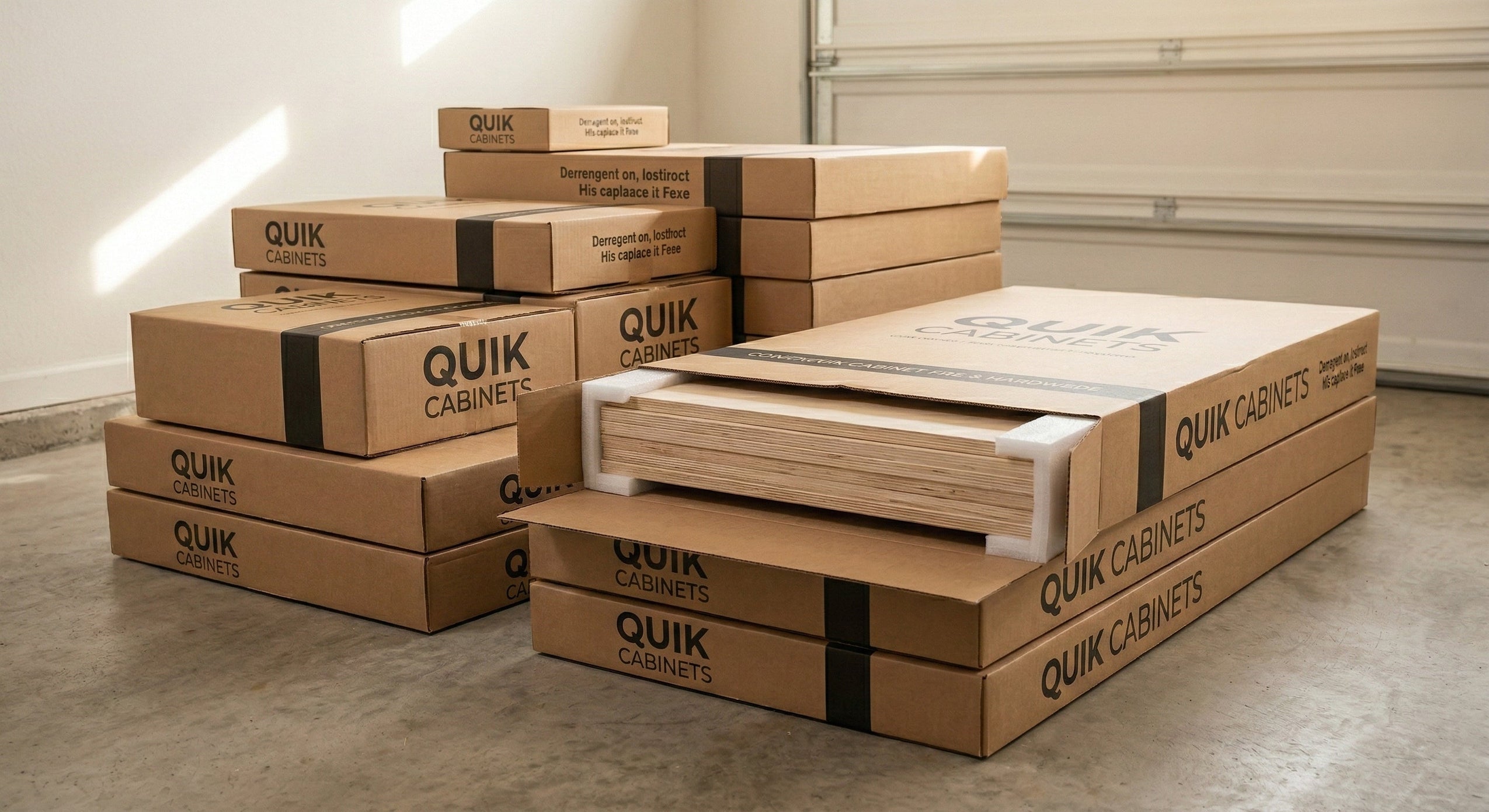
What to Expect When Your Cabinets Ship LTL Freight
A week or so after your cabinets ship, you'll get a call from a freight company you've probably never heard of, asking to schedule a delivery window. If you've only ever received normal packages, that call can be a little disorienting. It shouldn't be. It just means your kitchen is moving the way heavy freight always moves.
Here's what's actually happening, what delivery day looks like, and the one thing you absolutely should not skip when the truck pulls up.
What "LTL freight" even means
LTL stands for "less-than-truckload." Your cabinets don't fill an entire semi, so they ride on a shared truck with other freight, stacked and strapped onto a wooden pallet. It's the same system that moves appliances, furniture, and anything else too big and heavy for a parcel van.
That pallet is why a few things work differently from a typical delivery. The carrier calls ahead to set a time, the truck is large, and getting the freight off it takes a bit of cooperation on your end.
How delivery day actually goes
Roughly, here's the sequence.
You'll get a call to schedule. The freight terminal contacts you to arrange a delivery appointment, usually a window of a few hours rather than an exact minute. Keep your phone handy once the cabinets are in transit so you don't miss it and push the delivery back a day.
The truck arrives, and delivery is curbside. Standard freight delivery means the driver gets the pallet to the back of the truck and, with a liftgate, lowers it to the ground at the curb or the end of your driveway. The driver's job is to get it safely off the truck. Carrying cabinets into your house or up stairs isn't normally part of that, so don't count on it.
You move it inside. From the curb, the cabinets are yours to bring in. This is the part to plan for, which brings us to prep.
Inspect before you sign — this is the important one
When the driver hands you the delivery receipt to sign, you're signing that you received the freight in good condition. So look first.
- Walk around the pallet. Check the boxes for crushed corners, punctures, or water damage.
- If anything looks off, note it on the delivery receipt before you sign. Write down what you see. Take photos right there at the truck.
- If a box is badly damaged, you can note it as damaged or refuse that piece.
This takes about a minute and it's the single thing that protects you. A clean signature with no notes tells everyone the shipment arrived perfect. Flag damage at delivery and replacing the affected piece is straightforward. Sign first and find the damage after the truck leaves, and it's a much harder conversation. We'll always rather you take the minute at the curb.
How to be ready for the truck
A little prep makes the whole thing painless.
- Have a second person there. Cabinet pallets are heavy and awkward. Moving boxes from the curb into the house is a two-person job, sometimes more for a full kitchen.
- Clear a path and a landing spot. Know where the boxes are going before they arrive: garage, dining room, somewhere dry and out of the way.
- Have a phone camera ready. For the inspection step above.
- Keep the appointment. Missed windows can mean redelivery fees and a delay, so build the delivery into your schedule once you know it's coming.
Quick questions
Can I get the cabinets carried inside or installed? Standard freight is curbside. If you need more than that, ask about options before your order ships rather than hoping the driver will do it, because most won't. Check the shipping details for what's included on your delivery.
What if I'm not home for the delivery window? You generally need to be there to receive freight, inspect it, and sign. If your scheduled time stops working, call the terminal as early as you can to reschedule and avoid a redelivery charge.
What happens if I find damage after I've signed? It's harder to resolve, which is the whole reason for inspecting first. If it happens anyway, document everything immediately with photos and get in touch with us right away.
A smooth delivery starts before the truck
None of this is difficult. It just rewards knowing what's coming. Line up a second set of hands, clear your path, and plan to spend one minute inspecting before you sign. Do that and receiving a kitchen by freight is a non-event.
Still in the planning stage? Start a free 3D design, or order a $30 door sample to lock in your finish while you map out the rest.