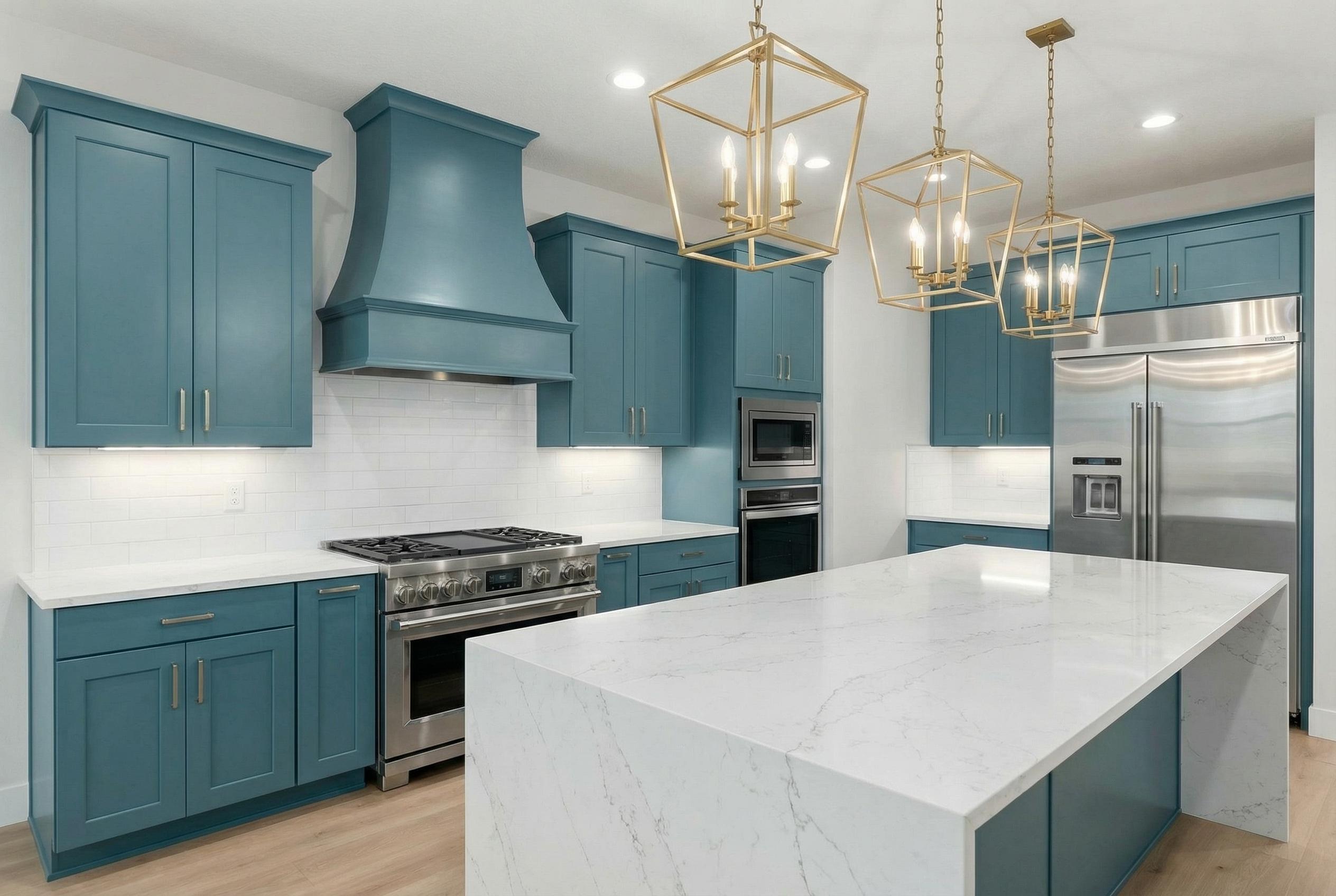
Best RTA Kitchen Cabinets 2026: A Buyer's Guide
What Are RTA Cabinets — and Why Are They Taking Over?
RTA stands for Ready-to-Assemble. Instead of arriving fully built (and marked up 2–3× for the privilege), RTA cabinets ship flat-packed with all hardware included. You assemble them at home in 15–30 minutes per cabinet using basic tools — a Phillips screwdriver and a rubber mallet is all you need.
The key insight most people miss: the materials and construction are identical to pre-assembled cabinets costing thousands more. You're not buying a lesser product. You're just skipping the showroom, the middleman, and the assembly labor markup. That's how you save 40–60% without sacrificing quality.
But not all RTA cabinets are created equal. The market ranges from flimsy particleboard boxes with cam-lock joints to solid wood, dovetail-drawer cabinets that rival true custom work. Knowing what to look for is the difference between a kitchen you love and one you regret.
The 6 Features That Separate Great RTA Cabinets from Cheap Ones
1. Box Construction Material
This is the single most important spec. The cabinet box (also called the carcass) is the structural foundation that holds everything together and supports your countertops.
What to look for: ½" furniture-grade plywood with birch veneer on interior surfaces. Plywood is dimensionally stable, holds screws securely, and resists moisture far better than alternatives.
What to avoid: Particleboard and MDF boxes. These are made from compressed wood particles and glue. They swell when exposed to moisture (which is inevitable in a kitchen), don't hold screws well over time, and are significantly weaker than plywood. If a manufacturer doesn't explicitly state "plywood construction," assume it's particleboard.
The IKEA comparison: IKEA's SEKTION line uses particleboard boxes with a foil finish. It works for a few years, but particleboard degrades faster — especially around the sink, dishwasher, and any area exposed to steam or moisture.
2. Drawer Box Construction
Drawers take more abuse than any other cabinet component. You open and close them thousands of times a year, load them with heavy pots and utensils, and slam them shut when you're in a rush. The construction method matters enormously.
What to look for: ⅝" solid hardwood (birch is the gold standard) with dovetail joinery. Dovetail joints are interlocking wood fingers that create an incredibly strong mechanical bond — they've been used in fine furniture for centuries because they simply don't fail.
What to avoid: Stapled or glued butt joints. These are the cheapest construction method, and they're the first thing to fail. Staples work loose over time, and glue joints crack under stress. You'll notice the bottom of the drawer starting to sag or the sides pulling apart within a few years.
The Home Depot comparison: Most Home Depot cabinet lines (Hampton Bay, for example) use stapled drawer construction. Their higher-end lines upgrade to dovetail, but at a significant price premium.
3. Door Material and Joinery
Cabinet doors are what you see every day. They define the look of your kitchen and need to hold up to constant use, cleaning, and temperature changes.
What to look for: Solid wood door frames with mortise-and-tenon joinery. This is the traditional furniture-making method where a tongue (tenon) fits into a pocket (mortise) for a joint that's both strong and beautiful. The center panel can be solid wood or plywood — both work well.
What to avoid: Full MDF doors (common in painted finishes), thermofoil doors (vinyl-wrapped MDF that peels near heat sources), and doors with simple butt joints or dowel construction.
4. Hardware: Hinges and Drawer Glides
Hardware is where cheap cabinets cut corners most aggressively — and where you'll feel it first.
What to look for: Soft-close concealed hinges (6-way adjustable) and full-extension undermount soft-close drawer glides. "Full-extension" means the drawer pulls all the way out so you can reach items in the back. "Undermount" means the glides are hidden beneath the drawer for a cleaner look. "Soft-close" means no more slamming.
What to avoid: Exposed hinges, side-mount drawer glides, and any manufacturer that charges extra for soft-close. If soft-close isn't included standard in 2026, that's a red flag about overall quality priorities.
5. Face Frame vs. Frameless
This is a design and construction choice, not a quality indicator — both can be excellent. But you should understand the difference.
Face frame (traditional American style): A solid wood frame attached to the front of the cabinet box. Provides additional structural rigidity and a traditional look. Doors are typically overlay, covering most of the frame. This is the dominant style in U.S. kitchens.
Frameless (European style): No front frame — doors attach directly to the box sides. Creates a more modern, seamless look with slightly more interior storage space. IKEA uses this style exclusively.
For most American kitchens, face-frame cabinets with ¾" solid hardwood frames and mortise-and-tenon construction offer the best combination of durability, aesthetics, and installer-friendliness.
6. Shelving
What to look for: ¾" plywood shelves with edge banding. Adjustable shelf pins so you can customize interior spacing. Plywood shelves resist sagging under load.
What to avoid: Particleboard shelves and ½" shelves. Thinner or weaker materials will bow over time, especially in upper cabinets loaded with dishes and glasses.
How Quik Cabinets Stacks Up
Here's where we stand on every feature that matters:
| Feature | Quik Cabinets | IKEA SEKTION | Home Depot (Hampton Bay) |
|---|---|---|---|
| Box material | ½" birch plywood | Particleboard | Particleboard (plywood in premium lines) |
| Drawer construction | ⅝" solid birch, dovetail | Particleboard, plastic clips | Stapled (dovetail in premium lines) |
| Door material | Solid wood, mortise & tenon | MDF/foil or wood veneer | MDF or solid wood (varies by line) |
| Soft-close hardware | Included standard | Extra cost per hinge | Extra cost per hinge |
| Drawer glides | Full-extension undermount | Standard side-mount | Side-mount (undermount in premium) |
| Shelving | ¾" plywood, adjustable | Particleboard | Particleboard |
| Face frame | ¾" solid hardwood | Frameless | Face frame (varies) |
| Starting price (base 12") | $122 | ~$150 | ~$200 |
| Shipping | 7 business days, flat-rate from $99 | In-store pickup only | 7–14 days |
We offer three door series — Ardelle Traditional Shaker (6 colors), Tallis Beveled Shaker (2 colors), and Slim Shaker (2 colors) — for a total of 10 finishes across every cabinet type. Every finish is available in every cabinet size. Order a $30 door sample to see and feel the quality before committing.
What to Look for Beyond the Cabinet Itself
Construction quality is only part of the equation. These factors also matter when choosing an RTA brand:
Design support: A good RTA company helps you figure out which cabinets you actually need. Kitchen layout is complex — blind corners, filler strips, and appliance clearances all need to be planned. Look for a free design service where professionals create a layout for your specific space. At Quik Cabinets, we offer a free 3D design service — send your measurements and get back a photorealistic rendering with an itemized shopping list.
Warranty: A meaningful warranty should cover defects in materials and workmanship for at least 5 years. Read the fine print — some warranties exclude hardware, hinges, or finish issues, which defeats the purpose.
Shipping speed and cost: Some RTA companies quote 2–4 week lead times. The best operators ship in 7 business days from warehouse stock. Shipping costs vary widely — some charge per cabinet, others offer flat rates. Make sure you understand the total landed cost before ordering.
Assembly method: Look for cam-lock or L-bracket systems. These create strong joints with basic tools. Avoid anything that requires specialized equipment or advanced woodworking skills.
Frequently Asked Questions
Are RTA cabinets the same quality as pre-assembled?
Yes — when you buy from a quality manufacturer. The materials, joinery, and hardware are identical. The only difference is that you spend 15–30 minutes assembling each cabinet yourself. That assembly step is what saves you 40–60%, because you're eliminating factory labor costs, reduced shipping volume (flat-pack takes 60–70% less space than assembled), and the retail showroom markup.
How long does it take to assemble an RTA cabinet?
Most wall and base cabinets take 15–30 minutes. Drawer base cabinets take slightly longer because the dovetail drawer boxes also need assembly. A full 20-cabinet kitchen typically takes one person a full day. See our complete assembly guide for step-by-step instructions and video walkthroughs.
Can RTA cabinets support granite or quartz countertops?
Absolutely — as long as the box is plywood (not particleboard). Plywood construction with solid wood face frames easily handles the weight of stone countertops without additional reinforcement.
What tools do I need to assemble RTA cabinets?
A Phillips screwdriver and a rubber mallet. That's it for assembly. A power drill makes it faster but isn't required. For installation (mounting to the wall), you'll also want a drill, level, and stud finder — but most people hire a handyman for that step.
How do RTA cabinets compare to IKEA?
The main differences are construction material (plywood vs. particleboard), drawer quality (dovetail vs. plastic clips), and design style (face-frame vs. frameless). Premium RTA brands like Quik Cabinets use significantly better materials than IKEA at a comparable or lower price point. See our detailed IKEA comparison for a full spec-by-spec breakdown.
Is it worth paying more for pre-assembled cabinets?
For most homeowners, no. The 40–60% savings from RTA is real money — on a $10,000 kitchen, you're saving $4,000–$6,000. If you're physically unable to assemble or simply prefer not to, pre-assembled is a valid choice. But you're paying a premium purely for the convenience of skipping 15 minutes of work per cabinet.
The Bottom Line
The best RTA cabinets in 2026 should have plywood boxes, dovetail drawers, solid wood doors, and soft-close hardware included standard. Anything less is a compromise that will show up in durability and daily satisfaction within a few years.
Don't just take our word for it — order a $30 door sample and hold the quality in your hands. It's the fastest way to know if RTA is right for your kitchen.
Browse all cabinets or get your free 3D kitchen design to see exactly what your new kitchen could look like.